

Festival Crowds and Industrial Growth Are Colliding in Gonzales — And Sanitation Providers Are Feeling the Strain
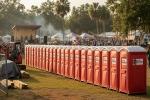
Gonzales sits at the center of two powerful forces shaping South Louisiana's sanitation landscape. On one side is the region's long-running industrial expansion, fueled by petrochemical activity, logistics facilities, and large-scale construction. On the other side are the city's festivals, fairs, and community events that draw thousands of visitors into outdoor spaces, often during the hottest months of the year. The result is a seasonal collision of demands that puts pressure on portable toilet suppliers, event coordinators, and jobsite managers alike.
Local operator Jake Poche explored many of these pressures in a recent analysis of sanitation planning in Gonzales. He explained how regional heat, construction activity, and crowd surges intersect to create new expectations around placement, servicing, and capacity planning. As industrial and event schedules overlap more frequently, sanitation companies are adjusting to keep up with conditions that shift week by week.
A City Defined by Growth and Gatherings
Gonzales has seen sustained industrial development throughout the last decade, a trend visible in employment data from the Bureau of Labor Statistics . New construction projects, expansions at petrochemical facilities, and a steady rise in logistics operations have turned Ascension Parish into a regional employment hub. This means more jobsites, more crews, and more daily restroom demand.
At the same time, Gonzales is home to some of South Louisiana's most well-attended events. The Jambalaya Festival, fairs at the Lamar Dixon Expo Center, rodeos, cook-offs, and seasonal gatherings all bring large crowds over condensed time periods. These events often require dozens or even hundreds of portable toilets, depending on layout and expected attendance.
Event planners rely on widely accepted guidelines that recommend roughly one restroom for every twenty-five guests at multi-hour outdoor events. During high heat, demand accelerates as hydration increases. Gonzales frequently hosts festivals in late spring and early summer, placing sanitation needs at their seasonal peak.
Heat Adds a Layer of Complexity for Both Sectors
Heat is the defining environmental variable in South Louisiana. NOAA climate data shows that the Baton Rouge area now experiences extended periods in which heat index values exceed 100 degrees Fahrenheit. These high-index days have increased over the past decade , creating conditions that affect both industrial sites and outdoor events.
Portable toilets warm quickly in full sun, and during festivals, lines can develop during peak hours. At jobsites, crews working long shifts increase restroom usage due to higher hydration needs, especially when temperatures remain elevated for consecutive days. Service providers across Ascension Parish report that heat alters not just how often toilets must be serviced but where they should be placed to remain accessible and tolerable throughout the day.
Shaded placement, airflow exposure, and staggered positioning have become standard considerations for both jobsite planners and event organizers. Without these adjustments, interior temperatures can rise quickly, discouraging use and prompting attendees or workers to leave the immediate area to find alternative facilities.
When Festivals and Industrial Peaks Overlap, Supply Tightens
A unique challenge in Gonzales arises when major events coincide with large industrial turnarounds or construction milestones. During these periods, both sectors draw heavily from the same pool of portable toilets and servicing teams. Local providers say that even small increases in demand can tighten supply across the region, especially during the most active months.
Event planners may need dozens of units delivered and serviced on short intervals throughout a weekend. At the same time, a nearby industrial site may ramp up to double its usual workforce for a major maintenance cycle. Without careful coordination, service routes can become overloaded, response times lengthen, and both customers and attendees feel the effects.
This is where local experience becomes invaluable. Providers like Jake Poche track industrial schedules, festival calendars, weather patterns, and school-year events to anticipate spikes in demand. Regional familiarity allows operators to route trucks efficiently, allocate units based on heat forecasts, and adjust servicing schedules before issues develop.
/'
Local Knowledge Gives Providers an Edge
National chains can supply volume, but their routing models often assume more predictable patterns than the ones found in Ascension Parish. Gonzales traffic, festival load-in zones, refinery access gates, and venue-specific placement rules can vary significantly from week to week. Providers who work exclusively in the region are often the first to notice shifting patterns in crowd behavior, construction scheduling, or seasonal growth.
This local advantage becomes most visible in heat-driven scenarios where time-sensitive servicing is essential. A delayed service during a festival can create long restroom lines at peak hours. A similar delay on a jobsite can lead crews to take longer breaks or walk to distant restrooms, reducing daily output. Local operators often mitigate these risks through adjusted dispatch routes, real-time monitoring, and frequent communication with site supervisors.
A Regional System Built on Timing and Anticipation
Gonzales is a community where industrial work and cultural events share the same calendar and the same infrastructure. Sanitation providers operate within this complex ecosystem, balancing long-term contracts with the unpredictability of heatwaves, sudden rain events, construction delays, and festival crowds.
As both industrial development and event attendance continue to grow, demand for portable sanitation is likely to rise alongside them. Providers who understand the region's rhythms are well-positioned to help contractors and planners stay ahead of challenges that may not be obvious on paper but are evident in day-to-day operations.
The intersection of heat, growth, and seasonal crowds has made sanitation a strategic consideration rather than a last-minute detail. In Gonzales, the success of a project or event increasingly depends on planning that recognizes the full context of South Louisiana's working and gathering environments—a reality that industry voices like Jake Poche are working to highlight.